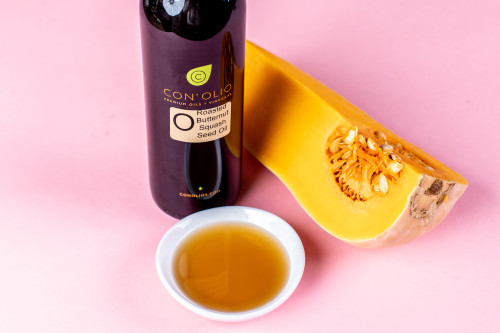
A flavorful, healthy and local alternative to European olive oil adding unique flavor to everything from roasted vegetables to pasta salad to oatmeal. Stony Brooks, butternut squash seed oil (BSSO) debuted in the fall of 2008. With the help of the Cornell Food Venture Center at Cornell University, they discovered a delicious, all-natural oil locked up in squash seed that would otherwise be destined for compost. This oil is released by precise roasting and expeller pressing without the use of chemicals, excessive heat or harsh filtration. This gently processed oil contains no hydrogenated fats, chemical additives, or preservatives. As far as we know, Stony Brook is the only maker of butternut squash seed oil in the US.
- Ingredient: 100% pure butternut squash seed oil, not a blend.
- Squash seeds are sourced exclusively from upstate New York from Martin Farms – grown and made in USA
- Made in small batches so oil in inventory is freshly pressed
- Flavor profile: warm, buttery, nutty taste reminiscent of cashew or peanut
- Good Food Award winner
- Uses: sautéing, grilling, or roasting vegetables and meats, or as a flavoring oil on prepared dishes. Smoke point of 425 F. Try drizzled over ravioli with wilted greens and grated parmesan.
- Shelf life: one year. Store in refrigerator to extend shelf life.
Butternut seeds are roasted, pressed and bottled at our Stony Brooks kitchen in Geneva, New York.
Expeller pressed means that oils are extracted using a chemical-free, mechanical process. The harder the nut or the seed, the more pressure that needs to be applied to extract the oil. This pressure results in more friction and higher heat.
Strictly defined, cold pressed–the method used for delicate fruit like olives–means that the pressing temperature is kept below 122 F. While many expeller pressed oils use the description “cold-pressed,” this is often used loosely and there is no regulatory standard. We prefer not use the term “cold pressed” for our oils, since the mechanical friction of the press does add some heat (reaching temperatures of approximately 140F), but these temperatures are low enough that the taste, nutrients and overall quality of the oil are retained.
How oil is extracted does matter–for taste, product quality, and environmental health. You may have noticed the different oil options that are available to you on the shelves of your supermarket. Canola oil, for example, might say, “expeller pressed” or “cold pressed” on the bottle. Or it might just say “canola oil.”
Producer: US-Stony Brook Crush Date: Crushed Fresh every Order(current batch 12/25)